

LED Truck GPS Tracking & Route Monitoring | Clear Pixel Media
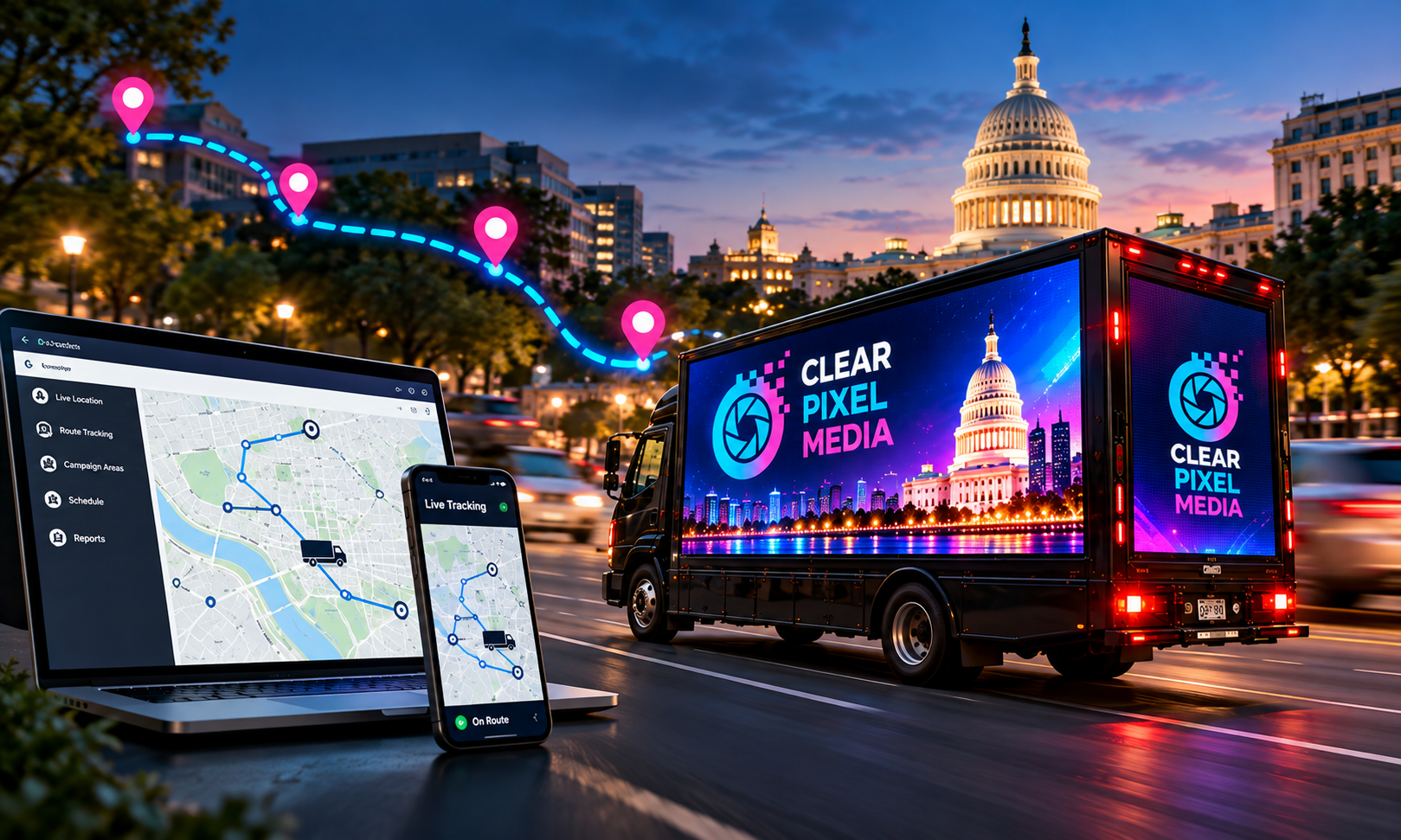
LED Truck GPS Tracking & Route Monitoring helps mobile advertising campaigns become more organized, transparent, and measurable. Instead of simply sending an advertising truck onto the road, businesses can monitor its movement, plan routes around target locations, coordinate schedules, and maintain better visibility throughout a campaign. This article explains how location technology supports mobile billboard advertising, improves campaign planning, and helps businesses make better use of every mile travelled.
Mobile advertising has changed the way brands approach outdoor marketing. Instead of depending entirely on a fixed billboard, businesses can take their message directly into busy streets, commercial districts, events, and targeted neighborhoods.
But there is another important part of running a successful mobile campaign: knowing where the advertising vehicle is and how it is moving.
Modern tracking technology makes this possible. With location-based monitoring and route planning, advertising teams can coordinate campaigns with greater visibility and control.
What Is LED Truck GPS Tracking?
LED truck GPS tracking uses location technology to monitor the position and movement of an advertising vehicle while it is on the road.
For campaign managers, this can provide useful information about the truck’s current location, route progress, and movement throughout a scheduled campaign.
Rather than relying only on a planned itinerary, teams can have a clearer picture of what is happening in the field. This becomes particularly useful when campaigns cover multiple neighborhoods, cities, events, or designated routes.
The technology is not about simply watching a vehicle on a map. It can become an important part of campaign coordination.
Why Route Monitoring Matters for Mobile Advertising
A mobile billboard campaign is different from a traditional outdoor advertisement. The vehicle is moving through different environments, which means location plays an important role in audience exposure.
A carefully planned route can help a campaign reach areas that matter most to the advertiser.
For example, a business promoting a new store may want its advertising vehicle near surrounding neighborhoods during peak traffic periods. An event organizer may want additional visibility close to the venue before the event begins. A product campaign may focus on commercial areas where its target audience is more likely to be present.
Route monitoring helps campaign teams maintain visibility over these planned movements and make adjustments when necessary.
Better Control Over Campaign Routes
Every advertising campaign has different objectives. Some may require broad local coverage, while others depend on specific streets, ZIP codes, business districts, or event locations.
With digital route planning, campaign managers can create customized movement patterns instead of following a generic route.
This flexibility can help businesses coordinate advertising activity with:
- High-traffic periods
- Local events
- Product launches
- Store openings
- Community activities
- Specific neighborhoods
- Important commercial areas
The result is a more structured approach to mobile outdoor advertising.
Turning Location Data Into Campaign Visibility
One of the biggest advantages of tracking technology is visibility.
When an advertising vehicle is moving across multiple locations, it can be difficult to understand campaign activity without a reliable way to monitor its movement. Location data provides a clearer operational picture.
Businesses can use this information to understand whether a vehicle is following its planned route and whether campaign activities are progressing according to schedule.
This can also make communication between advertisers and campaign teams easier. Instead of relying entirely on phone calls or manual updates, location information can support faster and more informed coordination.
Supporting Better Audience Targeting
Mobile advertising becomes more useful when the message reaches the right environment.
A campaign promoting a restaurant, retail store, service, or local event may have specific geographic priorities. Reaching the right areas can be just as important as creating an attractive advertisement.
Mobile billboard tracking can support this strategy by giving campaign planners better visibility into vehicle movement.
When combined with route customization, advertisers can build campaigns around specific geographic objectives rather than treating an entire market as one audience.
Flexible Campaign Management
Advertising campaigns often change after launch.
An event may attract a larger crowd than expected. A business may want to promote a new offer in a different neighborhood. A campaign schedule may need to change because of traffic, weather, or local activity.
Flexible route management allows campaign teams to respond to these situations more effectively.
The same principle applies to digital content. When combined with remote content scheduling, businesses can coordinate what appears on the LED screens with where the vehicle is travelling.
That creates an opportunity to connect message, timing, and location within one campaign.
More Than Just a Map
A tracking system should not be viewed simply as a map showing a moving vehicle.
For advertisers, it can become part of a larger campaign management process.
Route planning helps define where the campaign should go. GPS monitoring provides visibility while the campaign is running. Content scheduling controls what audiences see. Together, these tools can create a more organized mobile advertising operation.
This is particularly valuable for campaigns that operate across multiple locations or run for several days.
Why Businesses Should Consider Route Monitoring
Outdoor advertising is all about visibility. With mobile advertising, that visibility is connected directly to movement.
Having a structured approach to route planning can help businesses use their advertising time more effectively while giving campaign teams better operational control.
Whether the goal is local brand awareness, event promotion, product exposure, or reaching specific communities, location-based campaign management can add another layer of precision to a mobile advertising strategy.
Take Your Mobile Advertising Further
Your advertising should not disappear into the background. With LED Truck GPS Tracking & Route Monitoring, Clear Pixel Media helps businesses bring greater visibility and organization to their mobile advertising campaigns.
From customized routes to real-time location visibility and flexible campaign coordination, the right technology can help turn every journey into a more purposeful advertising opportunity.
Ready to Put Your Brand in Motion?
Let Clear Pixel Media help you plan and manage a mobile advertising campaign designed around your audience and target locations.